The Furniture and Decoration Icon Pack: Visual Language for a Design-Conscious World
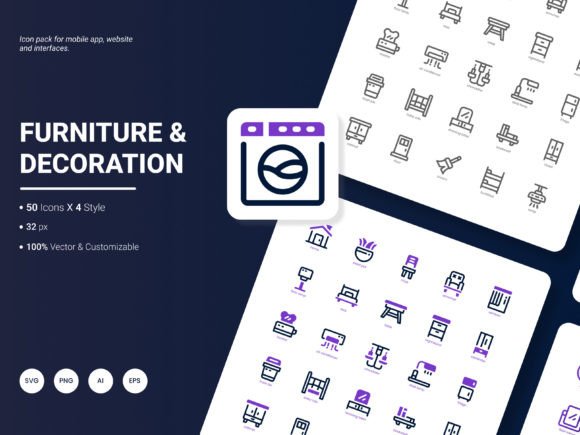
In today's digital landscape, communication is increasingly visual. For professionals across creative, entrepreneurial, and marketing fields, the ability to convey concepts quickly, elegantly, and consistently is paramount. This is where specialized digital assets, like the Furniture and Decoration Icon Pack, become not just tools, but essential components of a modern workflow. This collection of 200 stylish icons transcends mere graphics; it serves as a curated visual language for industries centered around home, space, and lifestyle.
Beyond Decoration: Icons as Conceptual Shortcuts
The Furniture and Decoration Icon Pack is more than a set of images. It is a comprehensive library designed to represent popular services, ideas, and objects within the realms of interior design, real estate, home services, retail, and lifestyle content. Each icon acts as a conceptual shortcut, allowing designers, presenters, and analysts to communicate complex ideas—like "smart home integration," "sustainable materials," or "minimalist decor"—with a single, universally recognizable symbol. This efficiency is critical in environments where user attention is scarce and clarity is valued.
The pack's relevance is amplified by broader trends. The rise of the "experience economy" and heightened consumer interest in personal space—fueled by remote work and wellness movements—have made discussions about furniture, layout, and decoration more mainstream. Consequently, professionals need assets that speak directly to these topics. Using generic or mismatched icons can dilute a message; using a tailored set like the Furniture and Decoration Icon Pack ensures visual coherence and thematic authority.
Integration into Modern Professional Workflows
The practical utility of this icon pack is defined by its flexibility. Available in AI, EPS, SVG, PNG, PDF, and JPG formats, it accommodates diverse applications. A web designer might use scalable SVGs for a responsive furniture e-commerce site. A marketing freelancer could integrate PNGs into a social media campaign for a home decor brand. An analyst might employ clean PDF icons in a report on consumer spending patterns in the home improvement sector.
This multi-format approach speaks directly to changing workflows, which are often cross-platform and collaborative. The editable nature of the core vector files (AI, EPS, SVG) is particularly significant. It allows teams to adapt icons to specific brand guidelines—modifying colors, line weights, or adding subtle embellishments—without losing quality or consistency. This adaptability turns a purchased asset into a living part of a brand's visual identity.
Why Stylish Icons Matter: Aligning with Aesthetic Expectations
The emphasis on "stylish" and "trendy" design in the Furniture and Decoration Icon Pack addresses a key shift in user and client expectations. Digital audiences are now highly design-literate. A dated, poorly crafted icon can undermine the perceived quality of an entire application, presentation, or website. This pack, with its fresh aesthetic, helps professionals meet the elevated standard for visual polish that is now commonplace.
Consider a mobile app for interior design consultation. Using crisp, contemporary icons for services like "color consultation," "floor planning," or "lighting design" immediately establishes a tone of expertise and modernity. Similarly, in analytical reports, well-designed icons used in infographics make data about furniture market trends more engaging and digestible. The style of the visual assets directly contributes to the credibility of the content.
The Role in Brand Storytelling and Service Clarification
For entrepreneurs and marketers, icons are powerful storytelling tools. The Furniture and Decoration Icon Pack enables clear visualization of service offerings. A startup offering modular furniture can use specific icons to depict different product configurations on its website. A home staging service can use icons to visually break down its process—from "decluttering" to "accessory placement"—in a client presentation. This visual breakdown simplifies complex service descriptions and enhances customer understanding.
This connects to a larger development in business communication: the move towards visual service blueprints and customer journey maps. Icons provide the standardized symbols needed to create these maps efficiently, making internal processes and client-facing explanations clearer across teams.
Meeting the Demand for Niche-Specific Assets
The creation of niche-specific icon packs like this one reflects a maturation in the digital asset market. The early web relied on broad, general-purpose icons. Today, professionals seek precision. A generic "house" icon cannot effectively represent "open-concept living," nor can a generic "chair" icon convey the specifics of "ergonomic office furniture." The Furniture and Decoration Icon Pack fills this gap by offering icons that are semantically precise for its niche, which improves communication accuracy and reduces cognitive load for the end-user.
This precision is vital for sectors like real estate technology, where portals use icons to filter property features (e.g., "walk-in closet," "hardwood floors," "patio"). Using detailed, accurate icons improves the user experience and the platform's perceived thoroughness. It's a practical response to the need for differentiation and specificity in competitive markets.
Future-Proofing Through Scalability and Style Variety
The inclusion of four styles within the pack is a forward-looking feature. Design trends evolve, and brand identities may shift. Having multiple stylistic interpretations of the same icon set gives designers a built-in path for iteration and refresh. A brand might start using the "line" style icons for a minimalist phase, then later switch to the "filled" style for a more robust visual period without needing to source a new pack.
Furthermore, the scalable vector formats ensure the icons remain future-proof. As display resolutions increase and new digital mediums emerge, these icons can be rendered at any size without degradation. This technical consideration is crucial for professionals planning long-term projects or building digital products intended to scale.
Practical Applications Across Industries
To ground this discussion, consider these observational examples of how such a pack is utilized:
- Website Design for Home Services: A renovation company's website uses icons from the pack to create a visual menu for its services—plumbing, lighting installation, custom cabinetry—leading to higher engagement and lower bounce rates.
- Mobile Applications for Furniture Retail: An app for a furniture store uses icons to tag product categories (sofas, dining sets, outdoor furniture) and filter attributes (material, color, style), creating an intuitive shopping experience.
- Presentations for Interior Designers: Freelance designers embed these icons into client pitch decks to visually outline project phases, proposed furniture layouts, and decor themes, making proposals more compelling and understandable.
- Analytical Reports & Infographics: Market research firms use the icons in PDF reports to illustrate key findings about consumer preferences for smart furniture or sustainable decor, enhancing data visualization.
- Template Creation for Social Media Marketers: Creators building social media templates for lifestyle brands use consistent icons from the pack to design posts about "home office tips" or "seasonal decor ideas," ensuring brand consistency across campaigns.
Connecting to Larger Developments: The Visual Interface Economy
The significance of the Furniture and Decoration Icon Pack is part of a larger shift towards a "visual interface economy." In an information-rich world, interfaces—whether websites, apps, reports, or presentations—compete on clarity, speed, and aesthetic appeal. High-quality, topic-specific iconography is a key investment in improving these interfaces. It reduces textual clutter, accelerates comprehension, and delivers a professional aesthetic that aligns with contemporary standards.
This trend is driven by technology that makes such assets easily integrable and by a global audience that expects intuitive, visually coherent digital experiences. For professionals, leveraging a dedicated icon pack is no longer an optional luxury; it's a strategic choice that enhances communication, strengthens branding, and streamlines production across multiple platforms and projects.
As the digital representation of physical spaces and services continues to grow, the need for precise, stylish visual tools will only intensify. The Furniture and Decoration Icon Pack, with its 200 icons, multiple formats, and editable styles, provides a robust foundation for professionals to build upon. It acknowledges that in today's market, how you visually present your ideas about space, home, and design is as important as the ideas themselves.
For future updates, we suggest exploring icons that represent emerging trends like biophilic design elements, home automation integration points, multi-functional furniture concepts, and sustainable material symbols. Additionally, considering styles that cater to specific design movements (e.g., Japandi, Industrial, Maximalism) could further enhance the pack's utility for designers seeking even deeper thematic alignment.