The Strategic Power of a Virtual Reality Icon Set
Visual communication is a cornerstone of modern digital strategy. For professionals working in the rapidly evolving fields of tech, marketing, and design, a well-crafted Virtual Reality Icon Set is more than a collection of images; it is a tool for clarity, branding, and user engagement. When you acquire a set of 60 meticulously designed icons, you are investing in a visual lexicon that can articulate complex ideas with simplicity and style. This isn't about mere decoration. It's about enhancing comprehension, streamlining communication, and creating a cohesive visual identity across every touchpoint of your project.
Beyond Decoration: Icons as Strategic Assets
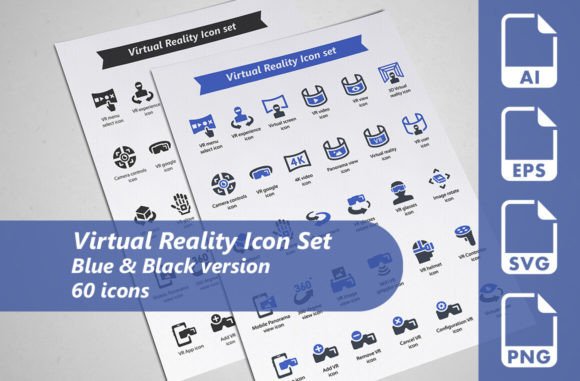
Think of these icons not as generic graphics, but as specialized visual shorthand. Each icon in a comprehensive Virtual Reality Icon Set—representing concepts from headsets and controllers to immersive environments and connectivity—serves a specific communicative purpose. For an entrepreneur launching a VR startup, using these icons on a website instantly signals industry relevance. For a marketer creating a campaign about immersive training, they provide immediate visual context that text alone cannot achieve. For an educator developing online coursework, they can break down complex technological processes into digestible visual steps. This strategic use transforms the icon set from a passive asset into an active component of your planning and execution.
Planning for Cohesive Visual Implementation
The true value of a Virtual Reality Icon Set emerges from intentional, planned use. Randomly scattering icons across a presentation or website dilutes their impact and can confuse your audience. A thoughtful approach begins with mapping your core messages to the icons available. Does your project need to emphasize user interaction, hardware, software environments, or data flow? The set's variety allows you to select icons that align precisely with these thematic pillars.
Consider the practical advantages of the included file formats—vector AI files for infinite scalability, SVG for web development, EPS for high-quality print materials, and transparent PNGs for flexible digital use. This versatility is a strategic boon. It means the same icon can maintain perfect visual integrity from a tiny mobile interface element to a large banner on promotional materials, ensuring brand consistency is operationally simple. Before implementation, audit all your planned materials—website, app UI, investor deck, brochures, infographics—and define a consistent style. Will you use the blue version for digital highlights and the black for print? Establishing these rules upfront turns a collection of 60 icons into a unified visual system.
Enhancing User Experience and Brand Perception
In digital interfaces, icons are fundamental to usability. A familiar icon can guide a user more quickly than a label. A Virtual Reality Icon Set designed with clear, recognizable symbolism reduces cognitive load, making your application or website more intuitive. This directly contributes to a positive customer experience. Furthermore, consistently using a professionally designed set elevates brand perception. It signals attention to detail, quality, and a modern, tech-savvy ethos. For freelancers and small business owners, this level of polish can be a competitive differentiator, making client presentations or published content appear more authoritative and credible.
Practical Applications Across Professional Fields
The applications for a versatile icon set are vast and grounded in real-world needs.
- Website & App Development: Use SVG icons for navigation menus, feature highlights, or tutorial sections to create an immersive thematic feel without lengthy explanations.
- Marketing & Promotional Materials: Integrate PNG or EPS icons into email campaigns, social media graphics, and printed brochures to visually anchor your message around VR technology.
- Education & Training: In illustrations and infographics for courses or manuals, icons can sequentially diagram VR setup procedures, safety guidelines, or interaction models, aiding learning and retention.
- Internal Communications & Planning: Even within teams, icons can be used in strategy documents, roadmaps, and presentations to visually categorize project phases, tech stacks, or user journey milestones.
In each case, the icon acts as a visual anchor, making information more scannable, memorable, and engaging.
The Risks of Unconsidered Use
While powerful, a Virtual Reality Icon Set carries risk if deployed without clear goals or context. Misapplication can lead to visual clutter, where icons compete with content rather than support it. Using an icon whose meaning is ambiguous to your specific audience can create misunderstanding. Perhaps the most significant risk is inconsistency—using different styles of VR icons from various sources across a single project. This results in a fragmented, unprofessional appearance that undermines brand trust and communicative clarity. The solution is to treat the icon set as a governed resource. Establish a small library of approved icons from the set for your project, document their intended meanings, and ensure all team members or contributors adhere to this visual protocol.
Making a Strategic Procurement Decision
When evaluating a set like this, look beyond the count of 60 icons. Assess its completeness for your needs. Does it cover the key concepts you need to communicate? The inclusion of two color versions (blue and black) and multiple scalable file formats speaks to long-term utility. It allows for adaptability as your projects evolve—from a dark-themed website to a bright printed report. This flexibility supports long-term planning, ensuring your visual assets remain useful across multiple campaigns and platforms. For decision-makers, the value is in operational efficiency and brand longevity. A single, comprehensive purchase eliminates the future time cost of searching for and licensing disparate icons, streamlining your creative operations.
Integrating Icons into Your Creative Process
To use a Virtual Reality Icon Set intentionally, integrate it into your early-stage design and planning workflows. During wireframing or mockup creation, placeholder these icons to test visual hierarchy. In content outlining, note where an icon could replace a paragraph of explanatory text. This proactive approach ensures the graphics are fundamental to the structure, not last-minute additions. Encourage your team to think symbolically: “What icon best represents ‘user immersion’ or ‘hardware calibration’ for this section?” This shifts the focus from aesthetic choice to communicative function, aligning the use of the icon set directly with your strategic outcomes.
The culmination of this strategic approach is a suite of materials—whether digital or physical—that communicates with authority, clarity, and visual harmony. Your audience, whether clients, users, or students, receives a polished, coherent experience. Your brand projects competence and modernity. And your internal processes gain efficiency from a reusable, reliable visual toolkit. A Virtual Reality Icon Set, therefore, is not merely a design asset. When approached with planning and purpose, it becomes a foundational tool for achieving better communication results, strengthening your professional presence, and executing your projects with greater visual precision and impact.